
Seitan is one of the most popular meat substitutes. It is also the most versatile. You can prepare it in 1001 different ways, varying its texture and taste, shaping it into chunks, sausages, steaks, balls…
It is very easy - and a lot cheaper - to make your own seitan. Home made seitan is also often tastier than store bought seitan, as you can prepare it with your own favorite spices and herbs.
Basic seitan can be made simply by combining water or vegetable stock with gluten flour and cooking it in water with any extra spices you may want to add. It’s that easy.
But if you want to take your seitan to a total new level of yumminess, you might want to choose carefully the spices you add to it. My reasoning in the choice of spices: I always use herbs or “taste enhancers” that offer what I call a “background” taste. Examples of those are ginger, paprika powder (smoked if you want), nutritional yeast, bay leaves (ground, if in the dough or whole if added to the cooking water). Then I love working with spices that “open” the taste buds such as allspice, ground fennel, caraway seeds or ground coriander. Adding an “umami” touch is a must in a good seitan. Examples of umami-containing ingredients: miso, soy sauce, (dried) mushrooms, seaweeds (wakame, preferably added to the cooking water), celery or lovage leaves (either added to the dough in powdered form or added as entire leaves to the cooking water). Last but not least I add aromatic herbs such as Italian herb mix or various herbs de Provence combined together or a choice of some of those herbs, such as rosemary, sage, savoury, marjoram, basil. Sometimes when I want a clearly exotic taste, I go for curry powders, Indian or Mexican spice mixes. Fancy a Thai touch on your seitan? Try using ground galangal root in the dough and cook the seitan in a water with kaffir lime leaves and lemongrass.

Here is an example of a well balanced seitan
What do you need:
500g gluten flour (from wheat, spelt or kamut)
1 tsp fennel seeds, ground (or caraway)
1 tbsp freshly grated ginger
1 1/2 tsp sweet paprika (or smoked paprika)
1 tbsp ground coriander seeds
1 tsp chilli flakes
1 tbsp sea salt
1/4 tsp allspice
1 1/2 tsp rosemary
1 tsp herbs de Provence
3 tbsp nutritional yeast (optional)
1 tbsp miso or 60 ml shoyu (for soy free, leave out shoyu or miso and add ground celery or lovage leaves and extra salt instead)
1 tbsp. liquid smoke (or smoked paprika instead of regular sweet paprika)
500-600 ml of cold water (depends on the quality of your gluten flour and on whether or not you use shoyu)
2 - 4 tbsp olive oil
Feel free to add any fresh herbs that are seasonably available such as tarragon, savory, sage, thyme, or other garden herbs.
Preparation
Add the wheat gluten, salt, nutritional yeast, and all of dried herbs to a bowl and stir until all dry ingredients are well combined.
Combine the miso or soy sauce, liquid smoke, olive oil and water in a cup (keep in mind the liquid should be cold, nothing should be warm).
Pour the liquid mixture into the wheat gluten and stir with a fork until a cohesive mass. Knead the dough gently until all ingredients acquire a smooth and even consistency.
You can now divide the dough into 2 or more “balls” or shape the dough into whatever sizes and form you want: chunks for stews or wok dishes, steaks, slices, blocks… If you want to make regular sausages you better wrap them in aluminium foil, so that they retain their sausage shape in this way. In that case, it is usually easier to steam them instead of cooking directly in water.
 |
| smoked paprika adds another delish dimension to your seitan |
Steaming
Bring water to boil in your steamer. Place the dough on the rack in the pan. It could be handy to use a piece of parchment paper or aluminum foil, to make sure the seitan pieces won’t stick to the pan (it is not a “must”). Steam for half an hour. Let the seitan cool in the steamer. Put it in the refrigerator. The seitan is even better the next day.
Traditional cooking
Bring water to a boil with 2 bay leaves, 2 celery (or lovage) leaves, nutmeg (I use the little pieces that are left from grinding them), 1 tbsp sea salt (or to taste) and a few slices of fresh ginger to taste * (and possibly a piece of seaweed such as wakame example), to boil. Put the dough in and let simmer for 45 minutes with the lid on. Let the seitan cool in the broth. The remaining broth is very tasty and I use that example, stews, sauces or as a base to marinate vegetables for the BBQ. You can also just cook the seitan in a ready-made vegetable broth if you want.
Notes:
* Each type of salt has a different effect and each person has a different level of salt tolerance/preference. The salt I used in this recipe is unrefined sea salt and it is much less “salty” than refined table salt. If not sure how much to use, start with less. You can always add more later on in a marinade or sauce while preparing the seitan in recipes. Tip: try adding a pinch black salt, a.k.a. kala namak.
* Ginger: the amount depends on your own preference but also on the kind of ginger and how fresh they are. When using freshly harvested ginger from full ground, you might need just a little bit. Too much ginger or coriander can easily overrule the other flavours and that is not what we want in a seitan that is meant to be used in a variety of dishes.
Variations:
- Add 40g chickpea flour, lentil flour or soya flour to the dry ingredients. This provides a firmer texture seitan, which works even better to make sausages and burgers.
- For a more tender seitan add (200g) of white beans or chickpeas, blended with part of the water
Note: if you want your seitan more “airy”, you can add a teaspoon of regular baker’s yeast to the dry ingredients and after combining it all with the wet ingredients, let it rise, covered with a wet kitchen towel, for at least half an hour (up to 2 hours).

Roulade:
It is very easy to shape the seitan dough and make filled seitan rolls (a.k.a. roulades). You can basically use any of your favourite ingredients as filling, such as mushrooms, nuts, seeds, sun-dried tomatoes, olive, capers, aubergine, chestnuts and garden herbs.
Here are two examples of fillings I used recently:

Mushrooms and nuts
400g various mushrooms (chanterelles, shitake, oyster mushrooms, champignons, etc)
2 tbsp olive oil
100g cooked sweet chestnuts (or corn bread, crumbled)
1/2 ts sea salt
1 tbsp teriyaki sauce (I use home made)
1 ts fresh thyme and sage
150g roughly chopped walnuts (or pekans or hazelnuts)
(optional: red bell peppers)

Chop the mushrooms roughly and stir fry them in olive oil until well cooked (about 5-7 minutes). Add the teriyaki sauce, sea salt, the herbs and nuts. Stir well. Add the cooked chestnuts, slightly broken with your hands, so that they help “bind” the mushrooms (you can also make a “powder” with them but I like small chunks of it). If not using chestnuts, you can use any other bread crumbs or potato flour or tapioca as binder.
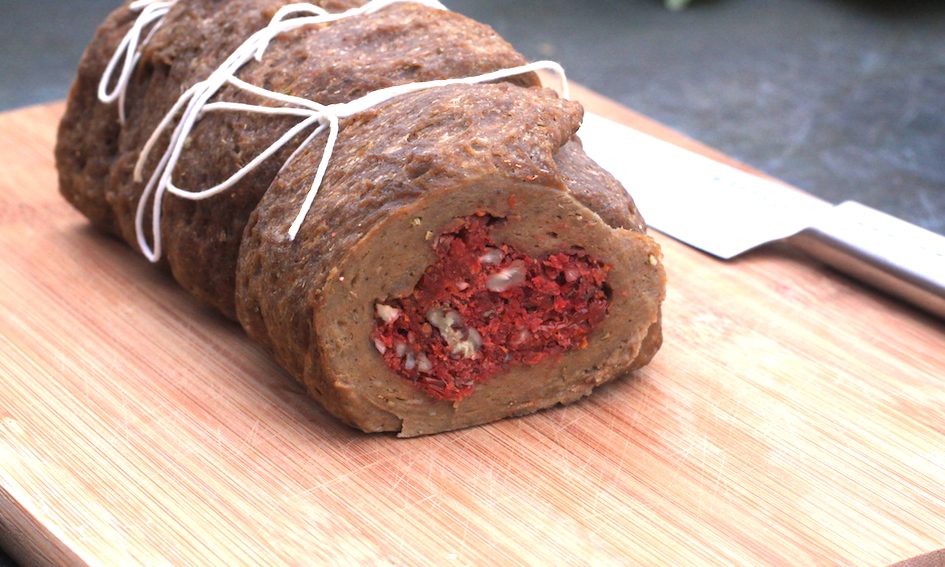
Beets and sun-dried tomatoes
1 cup of grated red beets (I use the beet pulp after juicing it, so the result is a finely grated and relatively dry pulp)
1/2 cup walnuts, roughly chopped
1/4 cup finely diced sun-dried tomatoes
1 tbsp herbs de Provence
1 ts caraway seeds
1 ts sambal (of 1/2 ts freshly chopped chillies)
1 1/2 ts sea salt
3 tbsp coconut milk (I used it to give it a creamy and moist effect, since the grated beet I used had lost most of its water)
1 tbsp balsamico vinegar
2-3 tbsp potato flakes + 1 tbsp tapioca starch (or bread crumbs or anything that can help bind the filling, making it less crumblish)
Combine all ingredients in a bowl and use it to fill the roulade.

To make the filled seitan, make sure to use something to tie, such as a kitchen twine, it so that it does not “unroll” during the steaming. There are different techniques for that but I used the simplest and easiest.
Two possible methods of preparing it:
Place the seitan on a greased baking sheet. Add a little bit of water to the baking sheet. Cover it with foil or with a silicone lid. Bake it at 190°-200°C for 20 minutes, lower the temperature to 170°C and bake it further 15 minutes.
2) This is the method I prefer. Steam the seitan roll for +/- 30 minutes. Allow it to cool while still in the steaming pan. Keep it in the fridge or freezer until the moment you want to serve it. Bake it immediately before serving it at 190°-200°C for 20 minutes.

Optional:
1) just before baking it use a brush to coat the seitan with a plant-based barbecue sauce, teriyaki sauce, hot ketchup or any home made spiced sauce that can give it a nice and sweet glaze.
2) wrap it in a puff pastry before baking, so as to get a “Seitan Wellington” effect
Suggestions of side dishes that go well together: cranberry sauce, mashed potatoes, lightly stir-fried flower-sprout, wild mushrooms in creamy saffraan sauce, arugula salad with pomegranate


